
 English
 русский
 Español
 عربى
عربى
Starry Sky Film and Optoelectronic Transparent Display: Full Technology Guide
Content
- 1 Starry Sky Films and Optoelectronic Mapping Transparent Displays: What the Technology Is and How It Works
- 2 Starry Sky Film: Construction and Light Emission Mechanisms
- 3 Optoelectronic Mapping Transparent Display: The Advanced Technology
- 4 Starry Sky Roof Upgrade: Automotive Applications
- 5 Starlight Ceiling Film in Architectural Applications
- 6 Comparing the Key Technologies: Selection Guide
- 7 Installation Considerations and Technical Specifications
- 8 Emerging Applications and Future Directions
Starry Sky Films and Optoelectronic Mapping Transparent Displays: What the Technology Is and How It Works
The starry sky effect in automotive and architectural applications -- a ceiling or roof panel that appears to contain hundreds or thousands of glowing pinpoints of light resembling a night sky -- is produced by two distinct technologies that are sometimes confused because their visual output is similar. Understanding the difference between a fiber optic star ceiling system, a printed LED film, and a true optoelectronic mapping transparent display is important for anyone specifying, installing, or upgrading a starlight ceiling in a vehicle, a home theater, a hotel suite, or a commercial interior.
Optoelectronic mapping transparent display technology represents the most advanced end of this product family: a film or panel that is transparent (or translucent) in its base state and becomes a programmable display surface when powered, with each light point individually addressable through embedded electronics rather than being a fixed physical feature of the material. At the other end of the scale, starry sky film with fixed printed or embedded light points provides a static or simply animated luminous pattern that requires no active addressing and is therefore simpler, lower-cost, and more widely applicable -- including in the automotive starry sky roof upgrade market where ease of installation in existing vehicles is a primary requirement.
This guide covers the full technology landscape from basic starry sky film through to sophisticated optoelectronic transparent display systems, including the specific application of starlight ceiling film in automotive roof upgrades and architectural interior design.
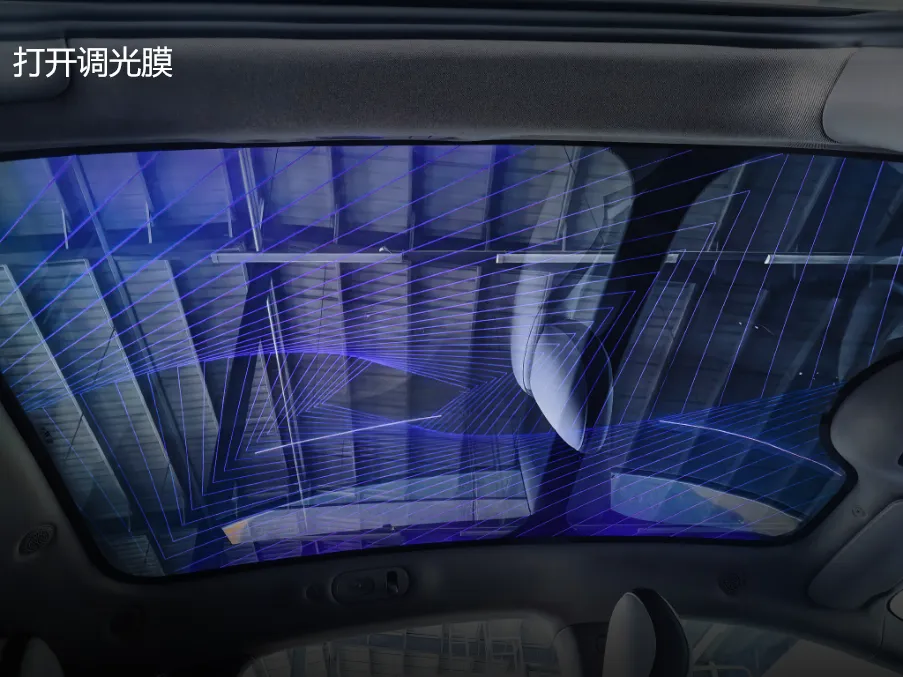

Starry Sky Film: Construction and Light Emission Mechanisms
Starry sky film is a multilayer functional film that creates the visual impression of a star-filled sky by embedding or printing light-emitting or light-directing elements within or on a flexible or rigid substrate. The film is thin enough to be applied to curved surfaces, flexible enough to conform to automotive headliners and architectural ceiling panels, and designed to produce either passive (reflective, phosphorescent, or photoluminescent) or active (LED, electroluminescent, or fiber optic) light points.
Fiber Optic Starlight Film
The most established technology for starlight ceilings in both automotive and architectural applications uses side-emitting or end-emitting optical fibers woven, embedded, or sandwiched within a fabric or film layer. A light source -- typically a high-brightness LED module with a color-mixing capability -- couples light into one end of each fiber bundle. The fibers transmit the light to their termination points, where it exits as a small, bright pinpoint. The apparent size and brightness of each star point depends on the fiber diameter, the termination treatment, and the distance from the viewer.
Fiber optic star ceiling systems decouple the light source from the star point positions, which means the light source (and any electronics driving it) can be located remotely -- in a car, this is typically in the trunk or behind a panel -- while only the thin, flexible fiber layer is present at the headliner surface. This makes fiber optic starlight film inherently heat-free at the ceiling surface, a significant safety advantage in automotive applications where heat at the headliner could damage fabric or foam backing materials.
The visual characteristics of a fiber optic star film are determined by the fiber count (total number of individual star points), the fiber diameter (which affects apparent star point size), the distribution pattern (whether star points are uniformly distributed, clustered to represent constellations, or randomly scattered), and the color capability of the LED light source (which ranges from single-color fixed to full RGBW color-changing with dynamic effects including twinkle simulation).
LED Embedded Starry Sky Film
A more recent approach embeds individual micro-LEDs or mini-LEDs directly into a flexible film substrate, with each LED serving as one star point. These embedded LED films are thinner than fiber optic systems (no need to route fibers from a remote source) and allow each LED to be individually controlled in principle, enabling dynamic lighting patterns that would be difficult to achieve with passive fiber routing. The film connects to a driver electronics module through printed circuit traces embedded within the flexible substrate, allowing the entire system to be a single integrated product rather than a separate fiber layer and light source.
LED embedded starry sky films require more sophisticated wiring integration than fiber optic systems because the electrical connections must be distributed across the entire film area rather than routed to a single point. In automotive applications, this makes installation more complex but allows finer control of individual LED behavior including per-point brightness adjustment, color control (in RGBW LED versions), and dynamic twinkling effects programmed through the driver module.
Photoluminescent and Phosphorescent Starry Films
Passive starry sky films using photoluminescent or phosphorescent compounds print or embed star-shaped light-emitting features that absorb ambient light during the day and emit visible light in darkness. These completely passive films require no power supply, no wiring, and no electronics, making them the simplest and most cost-effective option for architectural applications where a subtle, temporary glow is acceptable rather than a bright, actively illuminated star ceiling effect. The brightness and duration of the glow depend on the intensity of the charging light exposure and the specific phosphorescent compound used. They are more commonly used in children's bedroom ceiling film products than in premium automotive or hospitality applications where the visual quality of an active light source is expected.
Optoelectronic Mapping Transparent Display: The Advanced Technology
Optoelectronic mapping transparent display is a term that describes a class of display films and panels in which the spatial distribution and behavior of individual light-emitting elements is electronically mapped and controlled, enabling the display to produce not just a static or simply animated star field but a fully programmable two-dimensional luminous image or pattern on a substrate that remains substantially transparent when not powered.
Transparent Display Technology Principles
A transparent display differs from a conventional opaque display in that the substrate through which light is emitted is itself substantially transparent, allowing the viewer to see objects on the far side of the display while the display is simultaneously presenting an image. This transparency can be achieved through several technical approaches:
- Transparent OLED (TOLED): Organic light-emitting diode panels using transparent anode and cathode layers with an organic emissive layer between them. When powered, the OLED layer emits light; when unpowered, the panel is substantially transparent. TOLED technology offers excellent color accuracy, wide viewing angles, and low thickness but is currently limited in panel size and is significantly more expensive than other transparent display approaches.
- Micro-LED transparent display: Individual micro-LED chips with very small physical dimensions (typically 10 to 100 micrometers) are arrayed on a transparent substrate with transparent interconnects between them. The small physical size of the LEDs relative to the overall pixel pitch means that a significant proportion of the panel area remains transparent even when the display is populated with LED elements. Micro-LED transparent displays offer high brightness, long lifetime, and robustness advantages over OLED, with the transparency level determined by the LED fill factor and substrate design.
- Electroluminescent (EL) film displays: Thin-film electroluminescent panels distribute a uniform-emitting phosphor layer between transparent electrodes, producing a large-area glow that can be patterned and controlled. EL displays are less bright than LED-based approaches but are extremely thin, flexible, and can be produced in large formats suitable for full headliner coverage in automotive applications.
- Transparent LED mesh displays: A LED strip or dot matrix mounted on a transparent mesh or perforated transparent film creates a display surface with high transparency (typically 70% to 90% optical transmission) in the areas between the LED elements, while the LED positions produce the display image. Commonly used in retail window displays and architectural glazing, this technology is adapted for ceiling and roof applications where the transparent structure allows light from the vehicle interior or the sky above to pass through the unactivated portions of the display.
Optoelectronic Mapping: What It Adds
The optoelectronic mapping component of these display systems refers to the electronic architecture that assigns a coordinate address to each individual light-emitting element in the display and enables independent control of that element's intensity, color, and timing through a central processing unit or driver circuit. In a mapped system, the display controller knows the exact physical location and characteristics of every LED or OLED pixel and can drive each one with a specific programmed value at each frame interval, enabling the display to reproduce video content, respond to sensor inputs, or execute complex programmed lighting sequences that vary across the display surface in both space and time.
For a starry sky ceiling application, optoelectronic mapping means that each star point in the display can be individually programmed to twinkle at its own rate, change color independently, or fade in and out in a pattern that mimics natural star scintillation with a realism that a simple globally-dimmed fiber optic system cannot match. It also allows the display to transition between a star field mode and other lighting modes -- uniform ambient illumination, colored mood lighting, or animated patterns -- all from the same physical panel.
Starry Sky Roof Upgrade: Automotive Applications
The starry sky roof -- a headliner with hundreds or thousands of individual fiber optic or LED light points that create the impression of a night sky above the vehicle occupants -- was introduced as an ultra-premium feature on vehicles including the Rolls-Royce Phantom. The Bespoke Starlight Headliner from Rolls-Royce has remained one of the most recognized luxury interior features in the automotive industry. The technology has since become the basis for a substantial aftermarket industry offering starry sky roof upgrade kits that can be installed in a wide range of vehicles to achieve a similar effect.
Aftermarket Starry Sky Roof Upgrade Options
The aftermarket starry sky roof upgrade typically involves one of three approaches, each with different installation complexity and visual quality outcomes:
- Headliner replacement with pre-installed fiber optic starlight: A new headliner panel is manufactured with fiber optic strands pre-threaded through the headliner fabric and a pre-integrated LED light source. The existing headliner is removed and replaced with the star headliner as a complete assembly. This approach provides the highest quality result but requires removal of interior trim, sun visors, grab handles, and other headliner-attached components and is typically performed by specialist automotive interior installers.
- Starlight film overlay applied to existing headliner: A thin starlight film with pre-threaded fiber optics or embedded micro-LEDs is applied over the existing headliner surface using adhesive. The film is thin enough to accommodate the existing fabric texture, and the light source module is routed to a concealed location in the vehicle. This approach is less invasive than full headliner replacement and can be installed by a more limited specialist base, but the visual quality depends significantly on the flatness and condition of the existing headliner surface.
- Individual fiber insertion into existing headliner: Optical fibers are manually inserted individually through the existing headliner fabric using a needle-like tool, and the inserted fiber ends are terminated at the fabric surface to create each star point. This method is extremely labor-intensive and is typically only performed by high-end custom automotive interior specialists, but it allows the star distribution to be customized specifically for the vehicle and achieves the most authentic and seamless integration with the existing headliner material.
Key Specifications for a Starry Sky Roof Upgrade
The quality of the visual effect in a starry sky roof upgrade is determined primarily by the star density (number of fibers or LED points per square meter of headliner area), the star point diameter (smaller is more realistic), the color temperature and color-changing capability of the light source, and whether individual star twinkling is programmed. High-quality systems use 0.03mm to 0.1mm diameter fiber ends producing star points that appear as single bright spots at viewing distances of 400mm to 800mm from the headliner. Lower-quality systems use larger fiber bundles (0.5mm to 1mm) that produce visibly larger, less star-like points at typical in-vehicle viewing distances.
The twinkling effect -- in which individual stars appear to fluctuate in brightness at different rates and phases, simulating the scintillation of real stars -- is achieved in fiber optic systems by rotating a wheel with an irregular pattern in the LED light source, which modulates the light intensity feeding each fiber group at a random-appearing rate. In LED-based systems, individual LED PWM (pulse width modulation) control in the driver circuit achieves the same effect with greater flexibility in the twinkling pattern.
Color Options and Night Mode
Entry-level starry sky roof upgrade systems use a fixed cool white or warm white LED source, producing a monochrome star field. Mid-range systems use RGBW LEDs in the light source, allowing the star color to be adjusted between white, warm amber (like a sunset sky), blue (cool night sky), and other colors through a control module connected to the vehicle's electrical system. Premium systems program the transition between colors as a slow fade that simulates the changing colors of a real night sky during twilight and darkness.
Starlight Ceiling Film in Architectural Applications
Beyond automotive interiors, starlight ceiling film is applied in a wide range of architectural contexts where a luminous ceiling effect creates atmosphere, visual interest, or a specific experiential quality. Hotels, restaurants, home cinemas, spas, children's bedrooms, event venues, and retail environments all use variations of starlight ceiling technology to achieve distinctive interior effects.
Architectural Star Ceiling Installation Methods
Architectural starlight ceiling installations differ from automotive applications in scale (ceiling areas can range from 2 square meters in a small home cinema to several hundred square meters in a hotel lobby), in structural approach (the film may be applied to a plasterboard or suspended ceiling panel, incorporated into a stretched fabric ceiling system, or integrated into a custom acrylic or glass ceiling element), and in the permanence expected from the installation.
The most common approach for high-quality residential and hospitality installations uses fiber optic cable bundles terminated through a black or dark-colored acoustic fabric or woven backing, creating a seamless, textile-finished ceiling surface with embedded star points. The fabric backing absorbs ambient light, maximizing the contrast between the dark field and the bright fiber tips and producing the most realistic star field effect. The light source unit is located in the ceiling void or an adjacent equipment space, connected to the fiber bundles through a cable run that does not affect the finished ceiling appearance.
Integration with Ceiling Systems
In stretch ceiling systems -- a widely used architectural ceiling finish in which a PVC or polyester film is stretched across a perimeter track to form a taut, flat ceiling surface -- starlight elements are integrated by inserting fiber optic terminals or micro-LEDs through the stretched film before tensioning, allowing the ceiling to present both a clean flat surface and a star field effect in the same installation. The stretched film ceiling format is particularly popular for hotel room ceilings and home cinema installations because it accommodates lighting, projection, and acoustic panels behind the same surface and can be installed over an existing ceiling without major structural work.
Dynamic and Programmable Ceiling Effects
For commercial hospitality and experiential retail applications, the ability to program and change the ceiling appearance in response to time of day, event programming, or user interaction adds significant value over a static star ceiling. LED-based starlight ceiling systems connected to a building management or lighting control system can program seasonal sky simulations (different constellation patterns and color temperatures for summer versus winter skies), event-specific lighting modes (a shooting star animation for a New Year celebration, a meteor shower effect for a themed event), or gradual transitions from a twilight amber sky to a deep midnight blue field over the course of an evening dining service.
These programmable effects become particularly powerful when the optoelectronic mapping transparent display technology described above is applied to an architectural ceiling context: the ceiling can transition between a transparent daylight mode (allowing ambient light from skylights above to pass through), a partial star mode, and a full display mode showing programmed content -- all from the same physical ceiling surface.
Comparing the Key Technologies: Selection Guide
| Technology | Transparency When Off | Individual Point Control | Installation Complexity | Best Application |
|---|---|---|---|---|
| Phosphorescent film | Opaque | None (passive glow) | Very low | Budget residential, children's rooms |
| Fiber optic starlight film | Dark (opaque fabric or film) | Grouped (by fiber bundle) | Moderate | Automotive, home cinema, hospitality |
| LED embedded starlight film | Translucent to opaque | Individual (with driver) | Moderate to high | Automotive upgrade, experiential retail |
| EL film display | Translucent | Zone-based | Moderate | Large-area ambient architectural lighting |
| Transparent LED mesh | High (70 to 90%) | Individual (fully mapped) | High | Architectural glazing, skylights, commercial display |
| Micro-LED transparent panel | High | Fully individual (pixel-level) | High | Premium automotive glazing, premium hospitality |
| Transparent OLED panel | Very high | Fully individual (pixel-level) | Very high | Premium automotive sunroof display, luxury retail |
Installation Considerations and Technical Specifications
Specifying and installing a starry sky film or optoelectronic transparent display requires attention to the electrical, thermal, and optical parameters of the system, particularly in the automotive context where the operating environment is significantly more demanding than a fixed architectural installation.
Power Supply and Electrical Integration
Automotive starry sky roof upgrade systems are designed to operate on 12V DC vehicle power. The LED light source module draws typically 3W to 15W depending on the brightness level and star density. The module connects to the vehicle's accessory circuit (often the interior lighting circuit) and may include a control interface that integrates with the vehicle's ambient lighting system or its own independent controller. Ensure that the total current draw of the upgrade system is within the capacity of the fused circuit it connects to, and that any aftermarket modification complies with the vehicle manufacturer's modification guidelines to avoid warranty implications or electrical system issues.
Architectural systems require mains power conversion through a suitable constant-current or constant-voltage driver matched to the LED or EL module's specifications. Driver selection should account for the total wattage of the installed system, the IP rating required for the installation environment, and the dimming protocol (0-10V, DALI, or DMX) if the ceiling is to be integrated into a building management or lighting control system.
Thermal Management
The LED light source for a fiber optic starlight system generates heat that must be dissipated to maintain stable light output and long LED lifetime. In automotive installations, the light source module should be mounted in a ventilated location (not enclosed in an unventilated cavity) with its heatsink oriented to allow natural convection cooling. LED junction temperatures above 85 degrees Celsius significantly reduce LED lifetime and shift the light output color, both of which degrade the visual quality of the star ceiling over time. Premium aftermarket systems incorporate thermal management design that maintains LED junction temperature within specification across the full range of operating temperatures the vehicle will experience.
Fiber Routing and Protection in Automotive Upgrades
Optical fiber in an automotive starry sky upgrade must be routed from the light source location to the headliner position without exceeding the minimum bend radius of the fiber (typically 20 to 50 times the fiber diameter for standard PMMA polymer optical fiber) or allowing the fiber to be pinched, kinked, or abraded by adjacent sharp edges. In a headliner replacement installation, fiber bundles are typically routed through the cavity between the headliner and the roof skin, which is the intended design space. In film overlay installations, the fiber connector must be routed to the light source module through a concealed path that does not interfere with sun visor, interior light, and trim operation.
Optical Performance: What Determines Visual Quality
The visual quality of the finished starry sky effect is determined by several optical parameters that should be specified before selecting a system:
- Star point brightness (mcd per point): The luminous intensity of each individual star point, which determines how visible the stars are against the background surface and whether they appear as sharp points or as diffuse glows. Higher brightness creates a more dramatic effect but requires higher power LEDs and may create visible hotspots if fiber density is low.
- Contrast ratio: The ratio between the brightness of the activated star points and the brightness of the background surface. A dark, non-reflective background surface (black or very dark navy) maximizes contrast and realism; a light-colored or reflective background washes out the star effect.
- Color temperature and color rendering: The color temperature of the star light source affects the subjective quality of the night sky effect. Cool white (5,000 to 6,500K) produces a crisp, blue-white star effect; warm white (2,700 to 3,000K) produces a warmer, amber-tinted effect. RGBW systems can transition between these and allow full color control for creative effects.
- Twinkling randomness: The most realistic twinkling effects use a noise-based or pseudo-random algorithm to drive individual LED or fiber group modulation, ensuring that no two adjacent stars twinkle in a perceptible synchronized pattern. Systems that use a simple repeating timer for twinkling produce a noticeably artificial, mechanical-looking effect that reduces the realism of the installation.
Emerging Applications and Future Directions
The convergence of starlight film technology with optoelectronic mapping transparent display capability is creating new application possibilities that go beyond the traditional star ceiling concept. In automotive design, several manufacturers are developing transparent glass roof panels with integrated micro-LED displays that can switch between fully transparent panoramic mode and a programmable display mode showing star fields, ambient color washes, or information overlays -- all on the same glass surface without any added film or headliner material.
In architectural design, the integration of programmable transparent displays into skylight and ceiling glazing elements is enabling building interiors that adapt their luminous environment continuously, replacing the fixed-pattern starlight ceiling with a dynamic surface that responds to occupancy, time of day, and programmed events. The distinction between a decorative luminous ceiling and an interactive architectural display surface is being progressively eroded as the display technologies that were previously only achievable in consumer electronics reach the film thicknesses, flexibility, and cost points needed for large-area architectural installation.
The practical result for buyers and specifiers today is a market that ranges from very accessible entry-level phosphorescent films at minimal cost through to sophisticated programmable transparent display systems at the frontier of display technology -- with the fiber optic and LED-embedded starlight film category in the middle providing the most practical balance of visual quality, installation accessibility, and cost for the largest share of automotive, residential, and hospitality applications.

-

Building 1, Building 3, No.68 Kangyuan Road, Qingpu District, Shanghai, China
-

-
-

+86-17621250420
Copyright © Shanghai Astrace New Material Technology Co., Ltd. All Rights Reserved. Car Modification Smart Glass Film Supplier
