
 English
 русский
 Español
 عربى
عربى
How Optoelectronic Mapping Improves Visual Quality in Automotive Glass Displays
Content
- 1 Introduction to Optoelectronic Mapping in Automotive Glass Displays
- 2 What is Optoelectronic Mapping Transparent Display?
- 3 Enhanced Visual Quality with Optoelectronic Mapping
- 4 Seamless Integration with Vehicle Systems
- 5 Durability and Safety of Transparent Displays
- 6 Design Flexibility and Aesthetics
- 7 Conclusion: The Impact of Optoelectronic Mapping on Automotive Glass Displays
Introduction to Optoelectronic Mapping in Automotive Glass Displays
In recent years, the automotive industry has seen significant advancements in display technology, with transparent displays becoming a key component in modern vehicle design. One of the most promising innovations in this field is **optoelectronic mapping transparent display** technology. This technology is transforming how automotive glass is utilized, enhancing both functionality and visual quality. In this article, we will explore how optoelectronic mapping improves the visual performance of transparent displays in automotive glass, and its role in creating an immersive and efficient user experience.
What is Optoelectronic Mapping Transparent Display?
Optoelectronic mapping transparent display technology combines advanced optical electronics with transparent materials to create displays embedded directly into automotive glass. These displays can be used for various functions such as navigation, entertainment, driver assistance systems, and augmented reality (AR). The integration of optoelectronic mapping allows these displays to be highly responsive, efficient, and visually vibrant, while maintaining the clarity and transparency of the glass.
Unlike traditional opaque screens, optoelectronic mapping enables the creation of transparent interfaces that don’t obstruct the driver’s view. The visual elements are overlaid on the glass, with the mapping ensuring that the content is displayed clearly without distorting the image or diminishing the transparency of the glass.
Enhanced Visual Quality with Optoelectronic Mapping
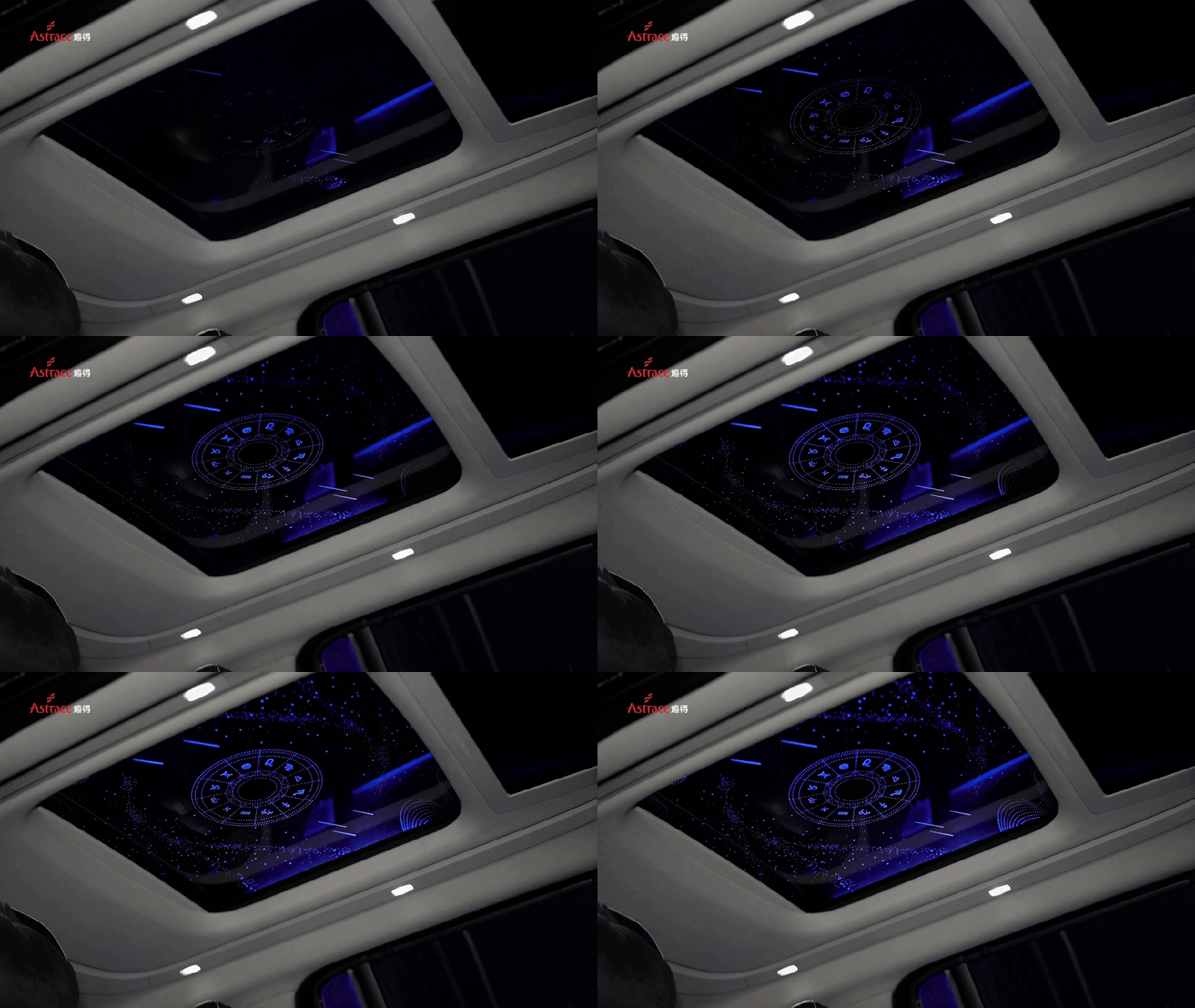
One of the key benefits of using optoelectronic mapping in automotive glass displays is the improvement in visual quality. The technology ensures that images and text displayed on the transparent screen are sharp, bright, and clear. By using advanced mapping techniques, the system can adjust brightness and contrast based on external lighting conditions, providing optimal visibility under both bright sunlight and low-light environments.
Improved Contrast and Brightness Control
- Optoelectronic mapping enables dynamic adjustments to contrast and brightness, improving readability under varying environmental conditions.
- The system can adjust content display based on ambient light, ensuring that the display remains visible and vibrant at all times.
- This technology allows for higher-quality images and text, with minimal glare or distortion, offering an enhanced user experience.
Seamless Integration with Vehicle Systems
Another significant advantage of optoelectronic mapping transparent displays is the seamless integration with other in-vehicle systems. These displays can be directly connected to vehicle control systems, providing real-time data, such as speed, navigation, fuel efficiency, and other critical information, without interrupting the driver’s line of sight. The integration of AR capabilities further enhances this experience by projecting helpful visual cues onto the windshield.
- Augmented reality (AR) displays projected onto the windshield can guide the driver by overlaying directional arrows, speed limits, and other navigational data directly onto the glass.
- Navigation systems integrated into transparent displays allow for a clean, distraction-free interface that keeps the driver focused on the road.
Durability and Safety of Transparent Displays
Optoelectronic mapping transparent displays are designed with durability and safety in mind. These displays are embedded within the automotive glass, which is typically tempered or laminated for strength. This ensures that the displays remain intact even under extreme driving conditions, such as high speeds or sudden impacts.
The technology also allows for the display to be more resistant to scratches, fading, and other forms of damage that could degrade visual quality over time. With proper integration, these transparent displays can contribute to overall vehicle safety by enhancing the driver’s situational awareness through clear, real-time data.
Design Flexibility and Aesthetics
Optoelectronic mapping transparent displays allow for greater design flexibility and aesthetic appeal in automotive interiors. Because the display is integrated into the glass itself, designers can create sleek, minimalist dashboards with fewer physical buttons and controls. This streamlined design not only improves the vehicle’s aesthetic appeal but also enhances user interaction by providing intuitive, touchless controls on the transparent display.
Minimalist Interior Design
- The ability to incorporate a transparent display into the vehicle's windshield or windows allows for a futuristic, clean interior design.
- Eliminates the need for bulky screens or dashboard-mounted displays, creating a more open and modern feel within the cabin.
Conclusion: The Impact of Optoelectronic Mapping on Automotive Glass Displays
In conclusion, **optoelectronic mapping transparent display** technology is revolutionizing the way automotive glass is used in modern vehicles. By improving visual quality, enhancing safety, providing seamless integration with vehicle systems, and offering design flexibility, this technology is setting the stage for the next generation of in-car displays. As manufacturers continue to refine this technology, we can expect even more innovative applications, making automotive glass an essential component of future vehicle designs.

-

Building 1, Building 3, No.68 Kangyuan Road, Qingpu District, Shanghai, China
-

-
-

+86-17621250420
Copyright © Shanghai Astrace New Material Technology Co., Ltd. All Rights Reserved. Car Modification Smart Glass Film Supplier
