
 English
 русский
 Español
 عربى
عربى
How Does Optoelectronic Mapping Transparent Display Turn Glass Into a Dynamic Canvas?
Optoelectronic Mapping Transparent Display, known as OMTD, represents a new category of intelligent glass technology that merges precision lithography with liquid crystal display principles to create a screen embedded directly within transparent surfaces such as car windows and sunroofs. Independently developed by Astrace, this technology remains completely invisible during daylight hours, preserving the natural clarity and function of the glass, while transforming into a vivid, dynamic light canvas after dark. This article examines how OMTD works, the technical innovations that make it possible, and the practical applications reshaping how transparent surfaces are used in automotive and beyond.
Content
- 1 What Optoelectronic Mapping Transparent Display Is
- 2 The Core Technology Behind OMTD
- 3 Key Characteristics That Set OMTD Apart
- 4 Automotive Applications of OMTD
- 5 Redefining Glass From Function to Art
- 6 Technical Considerations for Implementation
- 7 Looking Ahead for Transparent Display Technology
- 8 Final Thoughts
What Optoelectronic Mapping Transparent Display Is
OMTD is a display technology that integrates ultra-fine lithographic patterning with liquid crystal display components inside a transparent substrate, allowing glass to function simultaneously as a window and a screen. Unlike traditional displays that rely on opaque backlighting or pixel arrays visible at all times, OMTD is engineered so that its internal structures remain optically neutral under normal daylight conditions. This means a car window or sunroof treated with OMTD looks and behaves exactly like standard glass during the day, with no visible circuitry, discoloration, or haze.
When activated at night or in low-light conditions, the embedded optoelectronic layer illuminates specific mapped regions of the glass, producing crisp, controllable imagery ranging from brand logos and ambient lighting patterns to complex scenes such as a simulated starry sky. This dual-state behavior, invisible by day and expressive by night, is what distinguishes OMTD from conventional transparent OLED or projection-based display alternatives.
The Core Technology Behind OMTD
OMTD's functionality rests on the combination of two distinct technical disciplines: lithography and liquid crystal display engineering. Understanding how these two components work together explains why the technology can achieve both invisibility and high-resolution imagery within the same piece of glass.
Lithographic Patterning
Lithography allows manufacturers to etch extremely fine, precisely mapped patterns onto a transparent conductive layer within the glass structure. These patterns define the exact regions where light will later be emitted, functioning much like a hidden circuit map. Because the etched features are engineered at a microscopic scale, they do not scatter or refract ambient light in a way that would be noticeable to the naked eye during the day, which is central to preserving the glass's transparency when the display is inactive.
Liquid Crystal Display Integration
Layered alongside the lithographic pattern, liquid crystal display elements control light modulation across the mapped regions, enabling the system to produce controllable brightness, color, and motion. Rather than relying on a single uniform backlight, the liquid crystal layer works in coordination with the lithographically defined pathways to selectively activate only the areas needed to form an image, keeping power consumption efficient and image edges sharp.
Key Characteristics That Set OMTD Apart
Several defining characteristics differentiate OMTD from other transparent display approaches currently used in automotive glass and architectural applications.
| Characteristic | Description |
| Daytime Invisibility | No visible display artifacts under ambient daylight |
| Nighttime Activation | Bright, controllable imagery visible in low-light conditions |
| Structural Integration | Display elements embedded within the glass, not applied as an external film |
| Content Flexibility | Supports static logos, animated patterns, and scene-based imagery |
| Preserved Optical Function | Maintains standard glass transparency and light transmission when inactive |
Automotive Applications of OMTD
Automotive glass is one of the most compelling application areas for OMTD, since vehicle windows and sunroofs offer large, continuous transparent surfaces that are traditionally limited to a purely functional role. By embedding OMTD into these surfaces, automakers and aftermarket customizers gain the ability to turn ordinary glass into an expressive element of the vehicle's design and brand identity.
- Brand logo projection on side windows or rear glass, visible when the vehicle is parked or during nighttime display events.
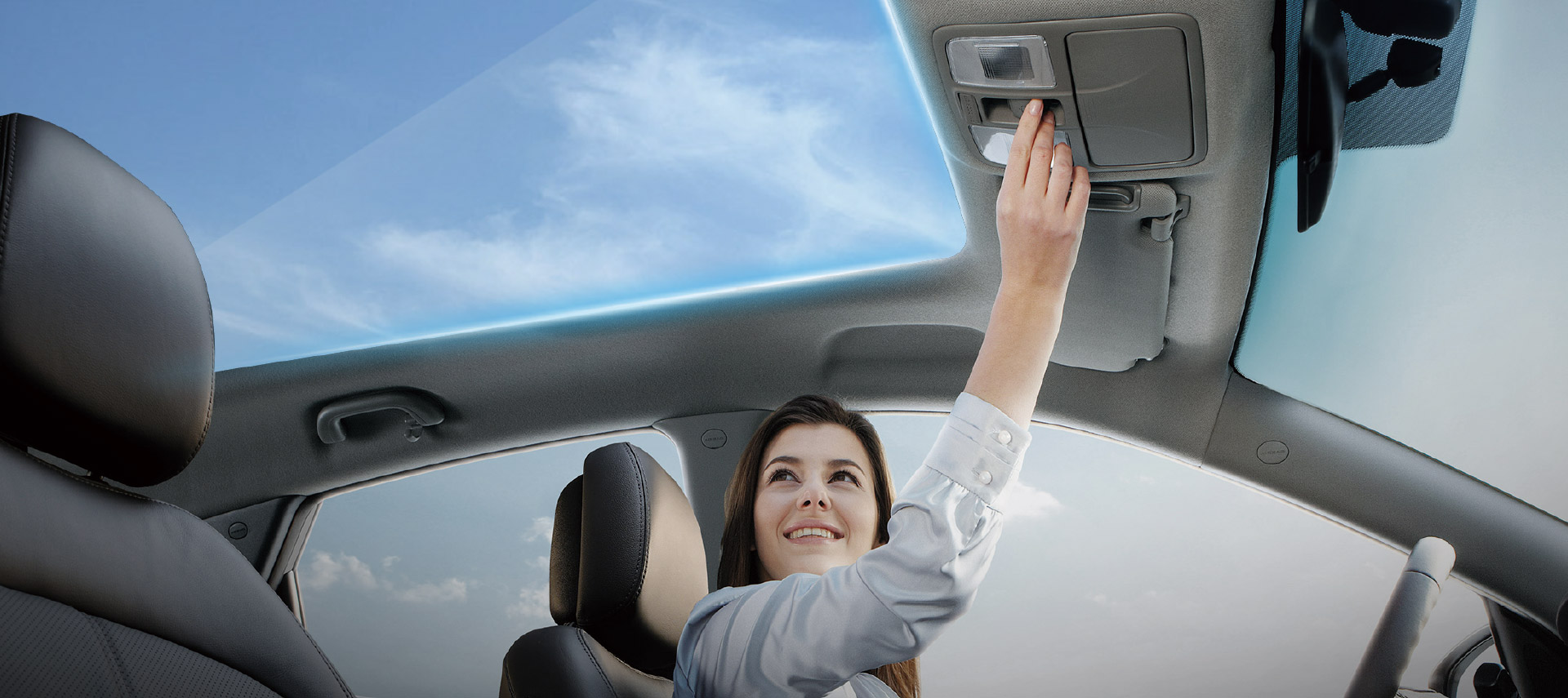
- Sunroof-integrated starry sky effects, creating an immersive interior ambiance during nighttime drives without any additional hardware protruding into the cabin.
- Dynamic welcome animations that activate as a driver approaches the vehicle, enhancing the overall user experience tied to smart key or app-based unlocking systems.
- Ambient ambient lighting patterns synchronized with interior mood lighting for a cohesive nighttime cabin atmosphere.
Because the technology does not compromise daytime visibility or add external components that could obstruct the driver's view, it offers a practical path for integrating display functionality into glass without sacrificing safety or regulatory compliance for window transparency.
Redefining Glass From Function to Art
Traditionally, automotive and architectural glass has served a purely functional role, providing visibility, weather protection, and structural enclosure. OMTD challenges this convention by treating glass as a canvas capable of conveying brand identity, mood, and interactive content without permanently altering its core purpose. This shift positions glass not merely as a passive barrier but as an active medium for visual expression, opening possibilities that extend beyond vehicles into storefronts, architectural facades, and interior design elements where transparent surfaces could similarly transform after hours into displays for artwork, signage, or ambient lighting.
This transformation reflects a broader trend in materials engineering, where surfaces are increasingly expected to serve multiple purposes simultaneously. Just as smart glass technologies have evolved to control light transmission and privacy on demand, OMTD extends that evolution further by adding a fully realized visual display capability while preserving the material's original transparency and structural role.
Technical Considerations for Implementation
Integrating OMTD into automotive glass involves several technical factors that manufacturers and designers should account for during the planning and production process.
- Power supply integration, since the liquid crystal display layer requires a stable, low-voltage power source routed discreetly through the vehicle's electrical architecture.
- Compatibility with existing glass lamination processes to ensure the embedded layer does not compromise the structural safety standards required for automotive glazing.
- Content control systems, typically managed through a connected app or vehicle infotainment interface, allowing users to select or customize displayed imagery.
- Durability testing under temperature extremes, vibration, and UV exposure to confirm long-term reliability across the vehicle's operational lifespan.
- Regulatory compliance regarding window transparency and light emission standards, which vary by region and vehicle type.
Looking Ahead for Transparent Display Technology
As transparent display technologies like OMTD mature, their potential extends well beyond decorative effects. Future applications could include integrated navigation cues projected subtly onto side windows, interactive advertising surfaces for commercial vehicles, or adaptive interior lighting systems that respond to environmental conditions in real time. The ability to combine full daytime transparency with rich nighttime display functionality positions OMTD as a foundational technology for the next generation of smart glass applications, where the line between structural material and interactive interface continues to blur.
Final Thoughts
Optoelectronic Mapping Transparent Display demonstrates how the combination of lithography and liquid crystal technology can redefine what ordinary glass is capable of, transforming car windows and sunroofs from static functional components into dynamic, expressive surfaces without sacrificing daytime clarity. As automakers and designers continue exploring ways to merge aesthetics with technology, OMTD offers a compelling glimpse into a future where transparent interaction becomes a standard feature of vehicle design rather than a novelty.

-

Building 1, Building 3, No.68 Kangyuan Road, Qingpu District, Shanghai, China
-

-
-

+86-17621250420
Copyright © Shanghai Astrace New Material Technology Co., Ltd. All Rights Reserved. Car Modification Smart Glass Film Supplier
