
 English
 русский
 Español
 عربى
عربى
How Does Multicolor Microcrystalline Medium Dimming Technology Improve Smart Film Performance?
Smart film technology has advanced significantly in recent years, but many traditional dimming systems still struggle with slow response times, hazy transitions, and limited color control. Multicolor Microcrystalline Medium Dimming Technology represents a meaningful step forward in addressing these limitations, offering a dimming approach that combines speed, clarity, and functional performance suited for both automotive and architectural applications. This article examines how this technology works, what sets it apart from conventional smart film systems, and the practical benefits it delivers for real-world installations.
Content
- 1 Understanding the Limitations of Traditional Smart Film Technology
- 2 What Is Multicolor Microcrystalline Medium Dimming Technology
- 3 Key Performance Advantages of Astrace's Dimming Film
- 4 Comparing Multicolor Microcrystalline Film to Traditional Smart Film Types
- 5 Automotive Applications for Instant-Response Smart Film
- 6 Architectural Applications for Seamless Transparency Control
- 7 Factors to Consider When Evaluating Smart Film for a Project
- 8 Final Thoughts on Multicolor Microcrystalline Dimming Technology
Understanding the Limitations of Traditional Smart Film Technology
Conventional electrochromic and liquid crystal smart films have long faced a common set of challenges. Many electrochromic films require several seconds to fully transition between clear and tinted states, making them poorly suited for applications requiring rapid visual privacy or glare control. Liquid crystal-based films, while faster, often struggle with haze during transitions, resulting in a milky or unclear appearance rather than a crisp, controlled shift in transparency.
Additionally, many traditional smart films offer only binary clear-to-opaque functionality, without the ability to modulate color tone or achieve intermediate dimming states smoothly. These limitations have historically restricted smart film adoption in applications where both aesthetic quality and functional performance are critical, such as premium automotive glazing or architectural facades where visual consistency matters as much as privacy control.
What Is Multicolor Microcrystalline Medium Dimming Technology
Multicolor Microcrystalline Medium Dimming Technology uses a specialized microcrystalline dimming medium capable of shifting optical states rapidly while maintaining exceptional clarity throughout the transition process. Unlike conventional dimming layers that rely on larger, slower-reacting molecular structures, the microcrystalline medium is engineered at a finer structural scale, allowing it to respond to electrical stimulus with significantly reduced lag and minimal light scattering.
The "multicolor" aspect of this technology refers to its ability to produce varied tint tones rather than being limited to a single dark state, giving designers and end users greater flexibility in matching dimming film performance to specific aesthetic or functional requirements across different applications.
Microcrystalline Structure and Rapid Response
The finer crystalline structure within the dimming medium allows for faster molecular alignment when an electrical field is applied, directly contributing to the film's ability to shift states in under 20 milliseconds. This near-instant response makes the transition virtually imperceptible to the human eye, closely mimicking the behavior of a mechanical shutter rather than a gradual chemical or optical shift.
Ultra-Low Haze Performance
Haze occurs when light scatters unevenly as it passes through a dimming layer, creating a cloudy or hazy appearance rather than clean transparency. By maintaining haze levels below 2%, this microcrystalline medium preserves visual clarity in both the clear and tinted states, avoiding the washed-out or foggy appearance common in many liquid crystal-based smart films.
Key Performance Advantages of Astrace's Dimming Film
Astrace's implementation of this dimming technology delivers several measurable performance benefits that distinguish it from conventional smart film products currently available on the market.
- Instant response time under 20 milliseconds, enabling near-immediate transitions between transparency states.
- Ultra-low haze below 2%, preserving crisp visual clarity throughout the entire dimming range.
- Seamless transparency control, allowing smooth modulation rather than abrupt or uneven transitions.
- Integrated thermal insulation properties, contributing to improved energy efficiency in both vehicles and buildings.
- Enhanced safety features suited for demanding automotive and architectural glazing applications.
Comparing Multicolor Microcrystalline Film to Traditional Smart Film Types
Understanding how this technology compares to established smart film categories helps clarify why it represents a meaningful performance improvement for applications requiring both speed and clarity.
| Film Type | Typical Response Time | Haze Level | Color Flexibility |
| Electrochromic Film | Seconds to minutes | Low | Limited |
| Standard PDLC Film | Under 1 second | Moderate to high | Single state |
| Multicolor Microcrystalline Film | Under 20 milliseconds | Below 2% | Multiple tint tones |
This comparison highlights why microcrystalline dimming technology is increasingly favored for applications where both immediate response and visual clarity are non-negotiable requirements, rather than acceptable tradeoffs.
Automotive Applications for Instant-Response Smart Film
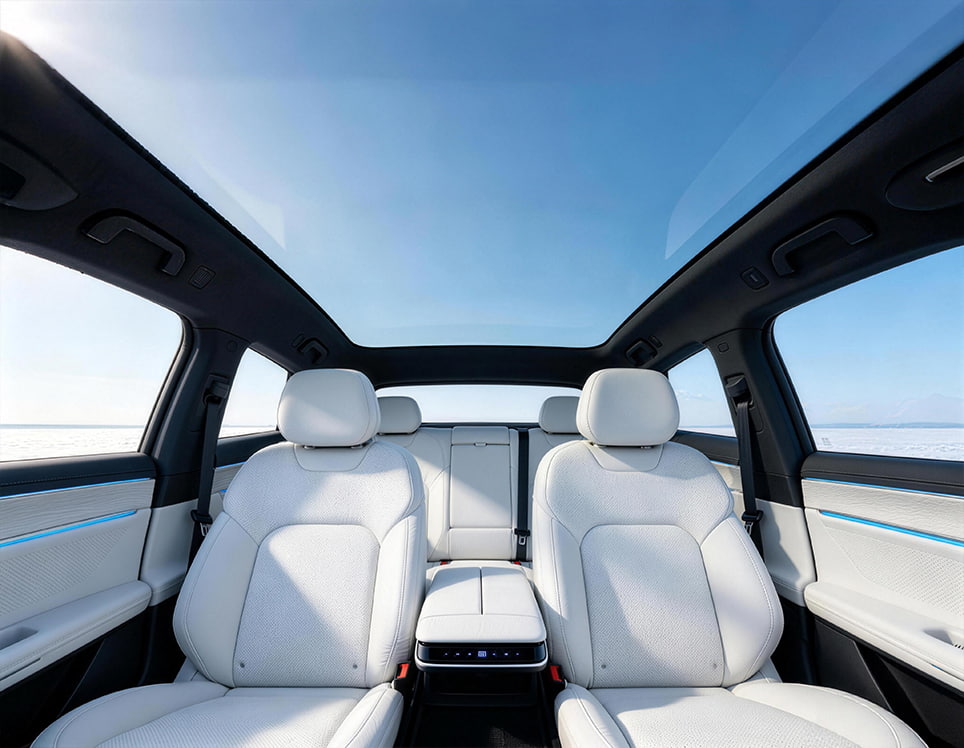
In automotive glazing, response speed and clarity directly affect both comfort and safety. Panoramic sunroofs and side windows equipped with this dimming technology allow drivers and passengers to adjust light transmission almost instantaneously, reducing glare without the delay associated with slower-reacting films. The thermal insulation properties also contribute to improved cabin temperature regulation, potentially reducing reliance on air conditioning systems and supporting overall vehicle energy efficiency, which is particularly relevant for electric vehicles where every efficiency gain extends driving range.
Safety considerations are equally important in automotive contexts. Films that can transition rapidly and predictably support use cases such as privacy partitions or adaptive glare control that must respond reliably without introducing distracting visual artifacts during the transition itself.
Architectural Applications for Seamless Transparency Control
In architectural settings, this dimming technology supports dynamic facades, interior partitions, and privacy glass that can adjust instantly based on occupancy, time of day, or user preference. The ultra-low haze characteristic is particularly valuable in commercial and residential settings where maintaining a clean, high-end visual appearance is a priority, avoiding the cloudy look that has historically limited smart glass adoption in premium architectural projects.
The thermal insulation benefits also align with growing demand for energy-efficient building envelopes, as dynamically controlled glazing can help reduce solar heat gain during peak sunlight hours while allowing full transparency and natural light during other periods, supporting broader building energy management strategies.
Factors to Consider When Evaluating Smart Film for a Project
When selecting smart film technology for a specific automotive or architectural application, several practical factors should guide the decision beyond response time and haze specifications alone.
- Power consumption requirements for maintaining the film's active dimming state over extended periods.
- Compatibility with existing glazing systems, including thickness and lamination requirements.
- Durability under long-term UV exposure and temperature cycling, particularly for exterior installations.
- Integration capability with smart building or vehicle control systems for automated dimming responses.
- Available color and tint range to match specific aesthetic or functional design goals.
Final Thoughts on Multicolor Microcrystalline Dimming Technology
Multicolor Microcrystalline Medium Dimming Technology addresses the core limitations that have long constrained smart film adoption, delivering the combination of speed, clarity, and thermal performance that both automotive and architectural applications increasingly demand. With instant response times under 20 milliseconds and haze levels below 2%, Astrace's dimming film sets a new performance benchmark, moving smart glass technology closer to the seamless, reliable transparency control that designers and engineers have long sought. As adoption grows across both industries, this technology is positioned to redefine expectations for what smart film can deliver in real-world, performance-critical applications.

-

Building 1, Building 3, No.68 Kangyuan Road, Qingpu District, Shanghai, China
-

-
-

+86-17621250420
Copyright © Shanghai Astrace New Material Technology Co., Ltd. All Rights Reserved. Car Modification Smart Glass Film Supplier
