
 English
 русский
 Español
 عربى
عربى
Can a Color-Changing Car Wrap Film Really Protect Your Paint and Transform Your Vehicle's Look?
Color-changing car body wrap films have evolved from a niche customization trend into a mainstream solution that serves two equally important purposes: protecting the original paintwork from physical and environmental damage, and dramatically transforming the vehicle's visual identity. Unlike a traditional paint job, a high-quality color-shift wrap film can be applied, maintained, and removed without affecting the factory finish underneath — all while offering an ever-changing, light-reactive aesthetic that no spray paint can replicate. Understanding how these films work on both fronts helps car owners make informed decisions about installation, material selection, and long-term care.
Content
- 1 What Is a Color-Changing Car Wrap Film?
- 2 How Color-Changing Wrap Films Protect the Original Paint
- 3 Aesthetic Performance: What Makes Color-Shift Films Visually Distinctive
- 4 Comparing Color-Changing Wrap Film to Alternative Options
- 5 Factors That Affect Long-Term Aesthetic and Protective Performance
- 6 Removal and Paint Condition Preservation
What Is a Color-Changing Car Wrap Film?
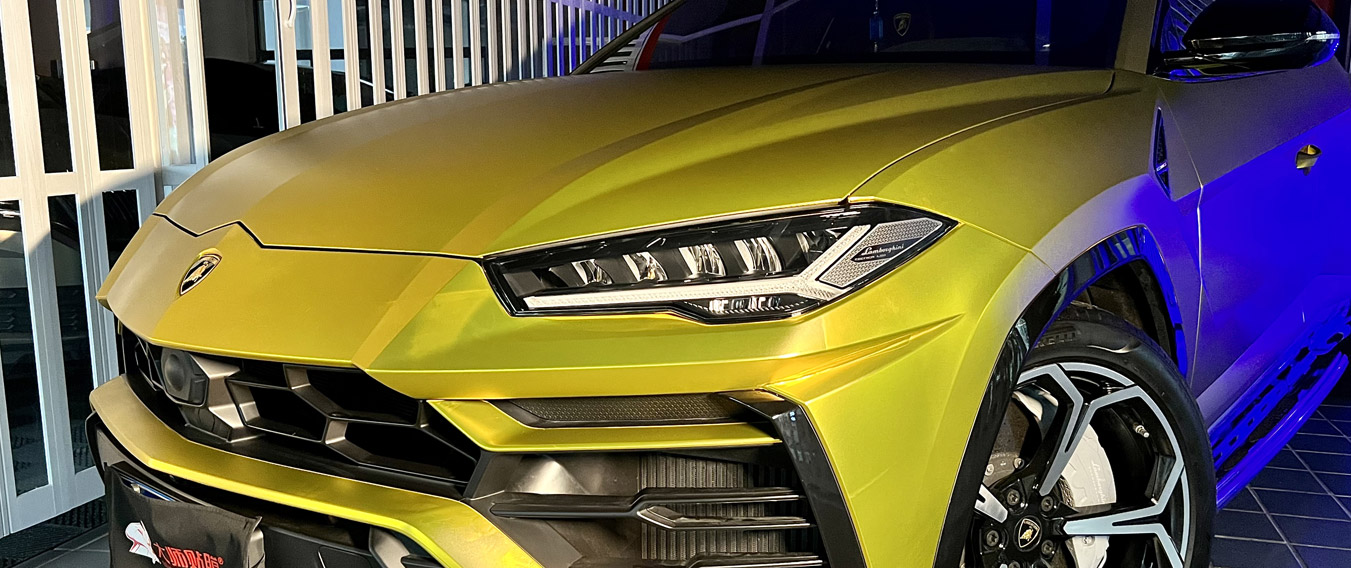
A color-changing car wrap film — often called a color-shift or chameleon wrap — is a multi-layer polymeric film applied directly over the vehicle's painted surfaces. What distinguishes it from standard solid-color wraps is the use of special pigment technology, most commonly interference pigments or thermochromic compounds, embedded within the film's color layer. Interference pigments contain ultra-thin metallic flakes coated with metal oxides of varying thicknesses. As the viewing angle or light source changes, the optical path length through these layers shifts, causing different wavelengths of light to constructively and destructively interfere — producing the characteristic color transition from, for example, deep purple to teal to gold depending on how the light hits the surface.
Thermochromic variants use temperature-sensitive dyes that change color in response to heat, creating a dynamic appearance that shifts as sunlight warms different panels at different rates. Both technologies are typically encapsulated within a polyurethane (PU) or polyvinyl chloride (PVC) carrier film, topped with a clear protective topcoat layer that governs the film's durability, gloss level, and self-healing characteristics.
How Color-Changing Wrap Films Protect the Original Paint
The paint protection function of a color-changing wrap film is not incidental — it is one of the primary engineering objectives of premium wrap products. The film acts as a sacrificial barrier that absorbs damage that would otherwise reach and degrade the factory paint surface.
Physical Barrier Against Abrasion and Stone Chips
The outer polyurethane topcoat layer is specifically formulated to absorb the kinetic energy of road debris, gravel, and stone chips. High-quality wrap films intended for full-body coverage typically have a total thickness of 150 to 250 microns, with the topcoat accounting for 30 to 50 microns of that. This thickness is sufficient to absorb the impact energy of small projectiles traveling at typical road speeds without the damage penetrating to the paint below. On conventional painted surfaces, stone chips breach the clear coat and color coat simultaneously, creating entry points for rust and oxidation. The wrap film catches these impacts, and since the film can be replaced in sections, repairing localized damage costs a fraction of a conventional paint repair.
UV Radiation Blocking and Oxidation Prevention
Ultraviolet radiation is the primary cause of automotive paint fading, chalking, and clear coat delamination over time. Quality color-changing wrap films incorporate UV inhibitors within both the topcoat and the adhesive layer, blocking a significant portion of UV-A and UV-B radiation from reaching the paint surface. The original paint underneath a wrap that has been in place for five or more years typically retains its original color depth and gloss as if it were new — a particularly valuable benefit for vehicle owners who plan to sell and want to maximize resale value by presenting factory-fresh paint upon film removal.
Chemical and Contaminant Resistance
Car paint is vulnerable to bird droppings, tree sap, industrial fallout, road salts, and fuel spills — all of which can etch or stain the clear coat if left in contact for extended periods. The polyurethane topcoat of a wrap film is chemically more resistant than most factory clear coats to these contaminants, and because it can be cleaned more aggressively without risk of swirl marks or hazing, contaminants are less likely to cause permanent damage. The film essentially acts as a renewable clear coat — one that can be replaced when its chemical resistance is depleted, rather than requiring a full paint correction and recoat.
Self-Healing Properties in Premium Films
Many premium color-changing wrap films incorporate self-healing topcoat technology, where the polyurethane layer is formulated with elastic polymer chains that flow back into alignment when heat is applied — either from direct sunlight, warm water, or a heat gun. Light surface scratches and fine swirl marks from routine washing disappear as the topcoat recovers its original surface geometry. This feature is particularly relevant for color-shift films because their highly reflective, multi-angle appearance makes surface micro-scratches more visually apparent than they would be on matte or solid-color films.
Aesthetic Performance: What Makes Color-Shift Films Visually Distinctive
Beyond paint protection, the visual impact of a color-changing wrap is the feature that most strongly differentiates it from other customization options. The aesthetic performance of these films depends on several interrelated factors.
Color Shift Range and Transition Quality
The breadth and smoothness of the color transition is the defining aesthetic characteristic. Entry-level color-shift films may transition between two adjacent colors (e.g., blue to green), while premium products can span three or more perceptually distinct colors across a 180-degree viewing angle. The transition quality — how smoothly one color flows into the next without banding, graininess, or color clumping — is determined by the consistency of pigment particle size, the uniformity of the oxide coating thickness on each flake, and the precision of the film manufacturing process. High-end films from established manufacturers produce transitions that appear almost liquid in their fluidity, creating a surface that seems to glow from within as the vehicle moves or as the viewer's angle changes.
Surface Finish Options and Their Visual Effects
Color-changing films are available in several topcoat finishes, each producing a distinct visual character. Gloss finishes maximize the reflectivity of the interference pigments and produce the most vivid, saturated color shifts. Satin finishes reduce specular reflection, creating a slightly muted, premium-luxury appearance that has become popular on high-end vehicles. Matte finishes nearly eliminate gloss, giving the color shift a more subtle, understated quality that works particularly well on darker base tones. Some manufacturers offer a "flip" or "candy" effect variant that combines a highly transparent upper layer with a deeper color substrate to produce exceptional color depth and vibrancy that changes dramatically from near-vertical to low-angle viewing.
Comparing Color-Changing Wrap Film to Alternative Options
Understanding how color-shift wrap films compare to other paint protection and customization methods helps clarify where they offer genuine advantages and where trade-offs exist.
| Feature | Color-Shift Wrap Film | Paint Protection Film (PPF) | Custom Respray |
| Color Change | Yes — dynamic multi-color | No (clear only) | Yes — static single color |
| Paint Protection | Good to Very Good | Excellent | None |
| Reversibility | Fully reversible | Fully reversible | Not reversible |
| Self-Healing | Yes (premium grades) | Yes | No |
| UV Protection | Yes | Yes | No added protection |
| Typical Service Life | 3–7 years | 5–10 years | Indefinite (with maintenance) |
Factors That Affect Long-Term Aesthetic and Protective Performance
The durability of a color-changing wrap film's appearance and its protective capability are directly tied to material quality, installation quality, and ongoing care practices.
- Film quality and brand: Premium films from established manufacturers use higher-grade polyurethane topcoats with more stable UV inhibitor packages, higher-purity interference pigments, and more consistent adhesive chemistry. Budget films may exhibit color fading, edge lifting, or topcoat yellowing within 2–3 years, while quality films maintain their visual performance for 5–7 years under normal conditions.
- Surface preparation before application: The paint surface must be thoroughly decontaminated, clay-barred, and inspected before wrapping. Any surface contamination, paint imperfections, or moisture trapped beneath the film will create adhesion failures, bubbling, or visual distortion over time. Scratches and swirl marks in the underlying paint may also telegraph through the film, particularly on high-gloss color-shift finishes.
- Installation craftsmanship: Proper film application requires controlled temperature, careful tension management during stretching around complex curves, and precise edge sealing to prevent moisture ingress. Improperly installed edges lift over time, allowing dirt and water to undermine the adhesive layer and compromise both aesthetics and protection.
- Washing and maintenance practices: Color-shift films should be washed with pH-neutral automotive shampoo using a soft microfiber mitt. Automated car washes with abrasive brushes can cause surface micro-marring that dulls the topcoat and reduces the vibrancy of the color shift. High-pressure washing should be directed at low angles to prevent edge lifting.
- Sealant and ceramic coating application: Many installers recommend applying a dedicated wrap sealant or a ceramic coating formulated for vinyl films over color-shift wraps after installation. This adds an additional layer of chemical resistance, makes the surface easier to clean, and enhances the depth and vibrancy of the color shift by creating an optically flat, highly reflective surface over the interference pigment layer.
Removal and Paint Condition Preservation
One of the most significant advantages of color-changing wrap films over permanent customization options is their complete reversibility — provided the film has been properly installed and maintained. When removed correctly, using controlled heat application and slow, angle-consistent peeling technique, a quality wrap leaves no adhesive residue on paint that is in sound condition. Any residue that remains can be removed with isopropyl alcohol or dedicated adhesive remover without harming the factory clear coat.
It is important to note that wrap films should not be left in place beyond their rated service life, as aging adhesive can become increasingly difficult to remove cleanly and may leave staining on older or compromised paint surfaces. Scheduling removal and replacement before the film reaches the end of its adhesive service life — typically indicated by edge lifting, adhesive bleed, or topcoat crazing — ensures that the paint protection benefit is maintained continuously and that the vehicle's original paint is preserved in the best possible condition for future sale or restoration.

-

Building 1, Building 3, No.68 Kangyuan Road, Qingpu District, Shanghai, China
-

-
-

+86-17621250420
Copyright © Shanghai Astrace New Material Technology Co., Ltd. All Rights Reserved. Car Modification Smart Glass Film Supplier
