
 English
 русский
 Español
 عربى
عربى
Tesla: The Days of 30°C Outside and 75°C Inside Are Over
After the beginning of autumn, many regions across China are still experiencing intense heat, with some city roads exceeding 60°C. For Tesla owners whose vehicles come with large panoramic sunroofs, this means driving what feels like a “mobile sauna” under the scorching sun.
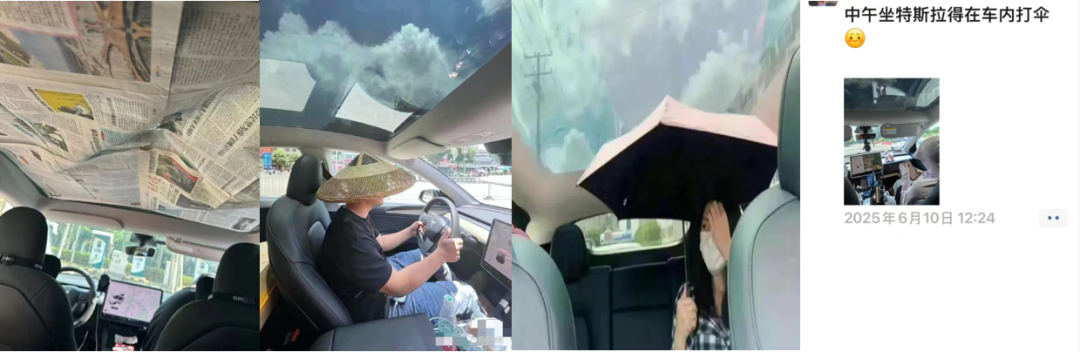
Netizens share photos of the actual car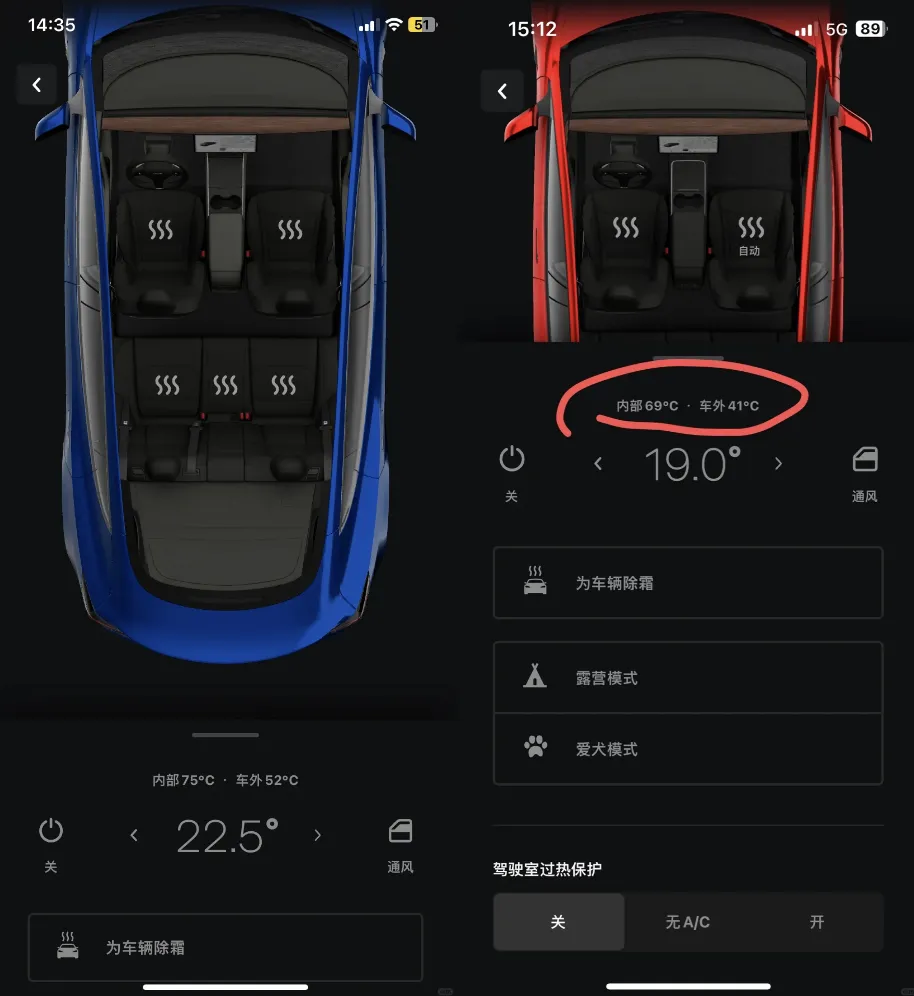
Although Tesla officially claims that its panoramic glass roof has been treated with heat-insulating coatings to block most ultraviolet and infrared radiation, many owners have found that during summer, parking under the blazing sun for half an hour still turns the car into a furnace. Opening the door feels like stepping into a sauna — seats are scorching, the steering wheel burns to the touch, and even with the air conditioner running at full power, it takes several minutes to reach a comfortable temperature.
The reasons are simple:
1. Large Glass Design:
The panoramic roofs of the Model Y and Model 3 cover almost the entire top of the car, offering a lighting area 70% larger than that of other cars in the same class. This huge glass area directly increases heat input. The Model Y uses heat-absorbing glass, which performs well in insulation at first. However, as time passes, the heat-absorbing materials inside the glass become saturated and start releasing the absorbed heat back into the cabin.
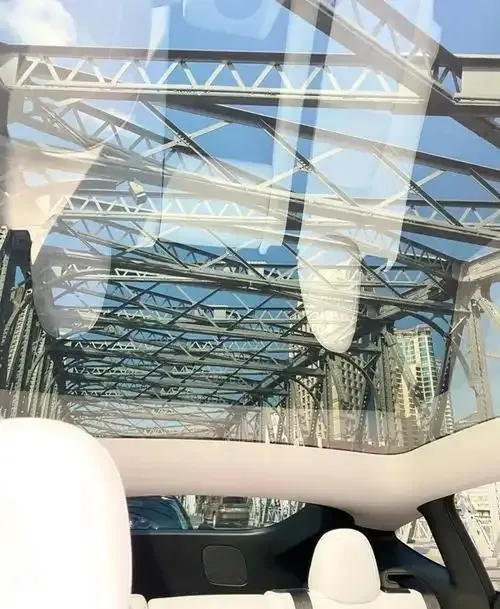
Although the refreshed Model Y has upgraded to a silver-coated reflective film, some owners still find it necessary to install additional sunshades.


2. Heat Insulation ≠ Cooling:
Factory-installed glass can reduce part of the infrared and ultraviolet radiation, but UV and IR only account for 56% of the sun’s total heat (53% infrared, 3% ultraviolet). It cannot block the vast majority of visible light radiation that causes heat buildup. Once sunlight enters the cabin, the trapped heat creates a greenhouse effect — continuously raising the interior temperature and intensifying the sense of stuffiness.
3. Heat Retention While Parked:
When parked under sunlight, the panoramic glass continuously transmits heat, causing the air, seats, and interior materials to rise in temperature. Since the heat cannot dissipate quickly, the car interior easily exceeds 50°C even with “heat-insulating glass.”
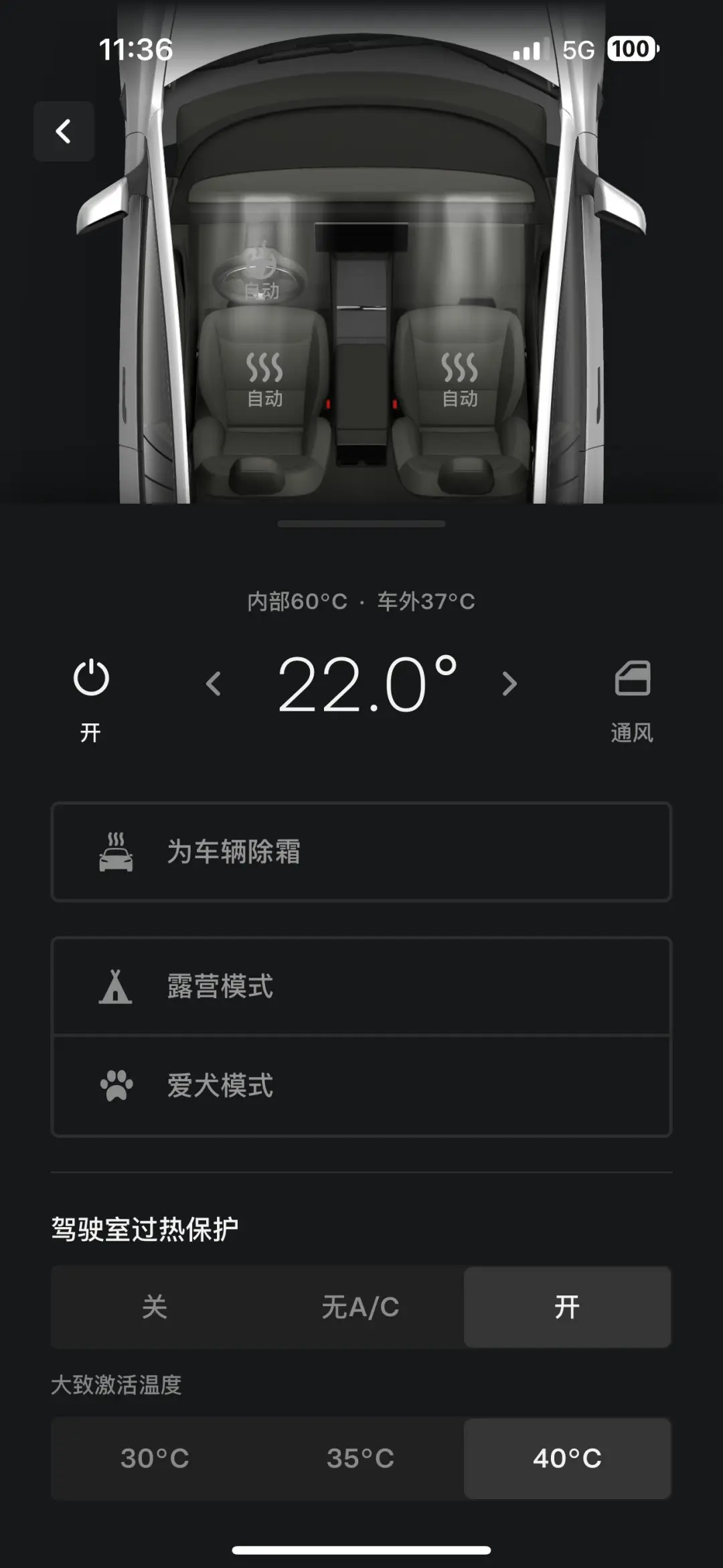
And for the sake of keeping cool, Tesla owners have gone to great lengths.
1. Bronze-Level Players: Hardcore DIY Cooling
Water Sprinkling: Splashing water over the roof after parking to temporarily cool down through evaporation.
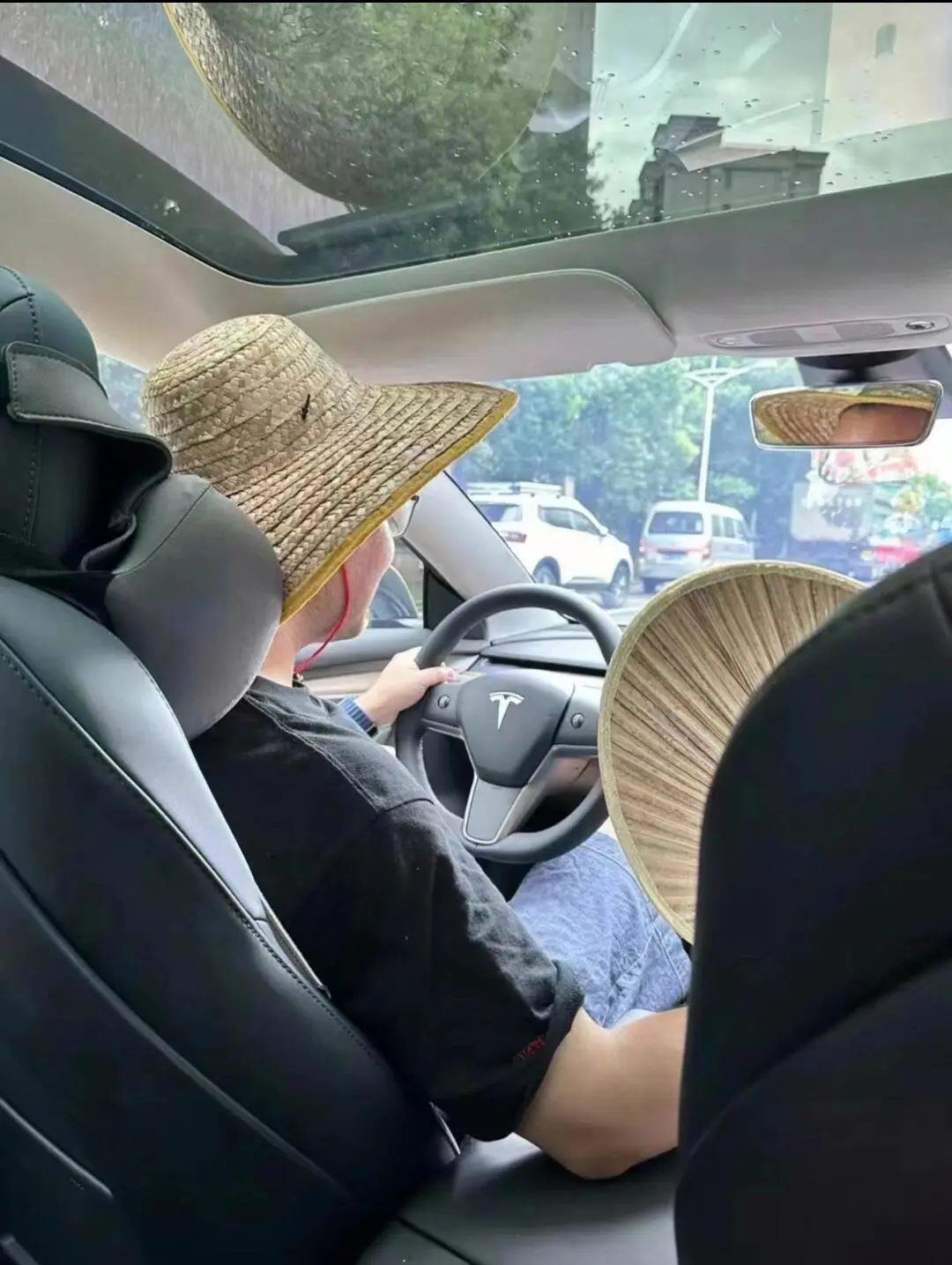
Umbrella Inside the Car: Keeping an umbrella over the driver’s seat, essentially turning the interior into a “mobile sunflower.”
Newspaper Layering: Using tape to stick old newspapers to the inside of the glass roof — sacrificing aesthetics for shade.
2. Gold-Level Players: Sunshades and Insulating Films
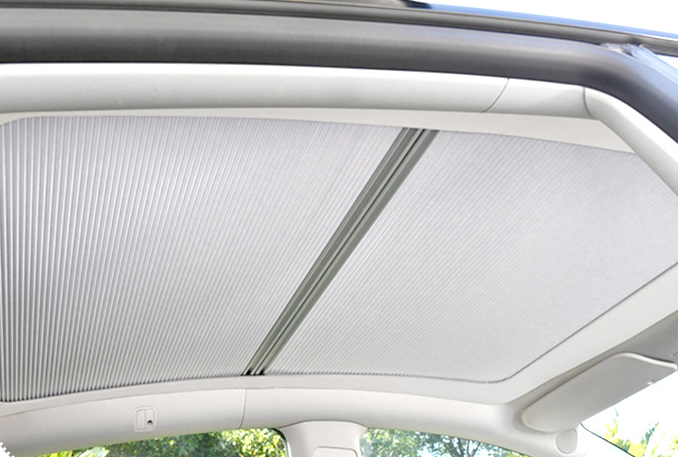
Sunshades (¥128–¥1000): They block most of the heat but are inconvenient to install and remove, obstruct vision, collect dust easily, are hard to clean, and occupy headroom.
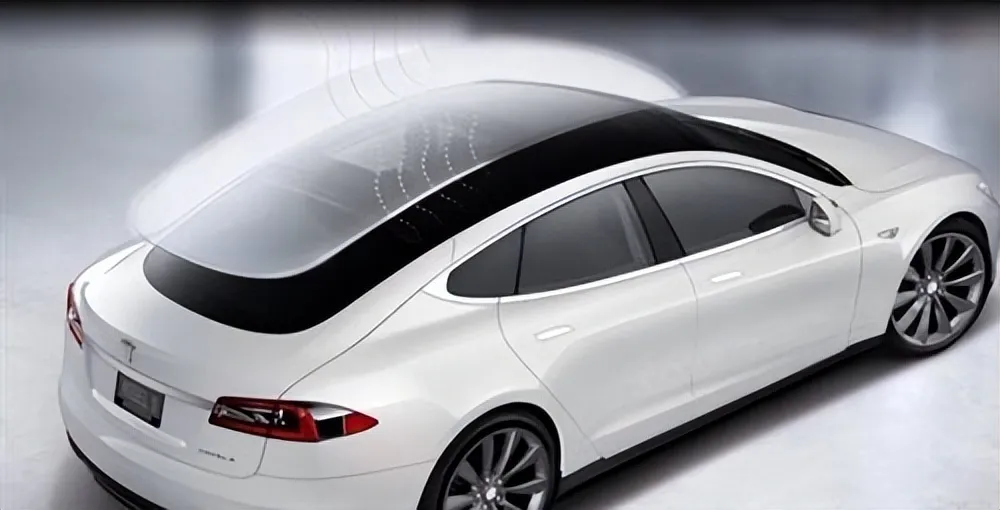
Traditional High-Performance Heat-Insulating Films (¥1900–¥4000): High-quality films (like ceramic films or magnetron sputtering metal films) can block 80–90% of infrared and ultraviolet radiation but still cannot fully block visible light, which accounts for 44% of total solar heat. As a result, the car interior still warms up slowly, and these films cannot dynamically adjust light transmission.
3. Diamond-Level Players: Smart Dimming Roofs (PDLC/EC Technology)
Smart dimming panoramic roofs use advanced electrical control technology to flexibly adjust the glass’s light transmission, providing excellent shading and insulation along with an enhanced sense of technological luxury.
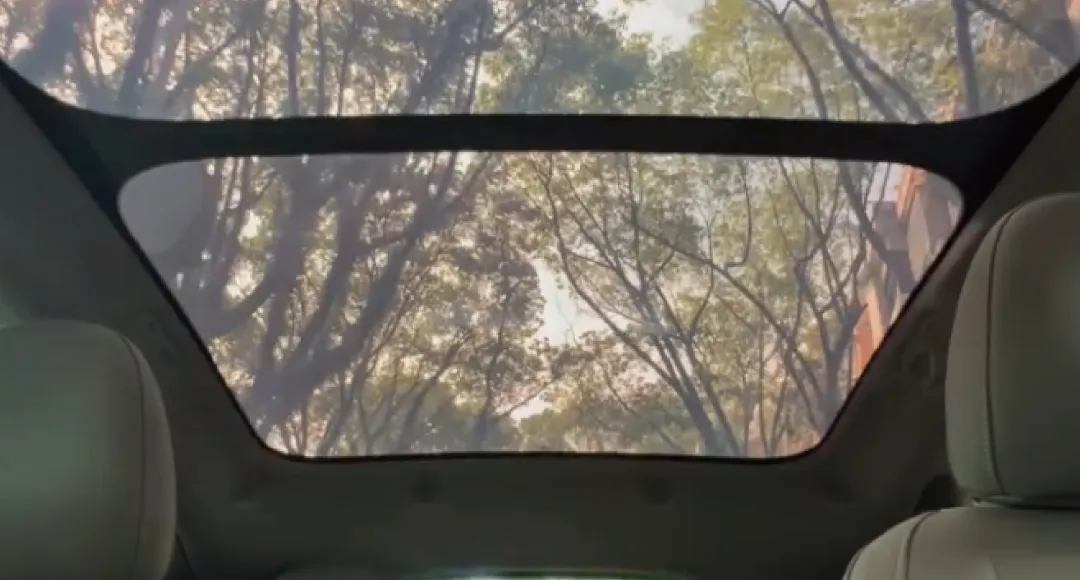
PDLC Technology (¥3000–¥9000): Becomes transparent when powered on and frosted when powered off, but the response time is relatively slow (about 1.5 seconds), and even when on, the glass appears hazy (like frosted glass), affecting visibility.
EC Technology (¥8000+): Offers excellent insulation and UV protection, but the color-changing process takes longer — about three minutes for a full panoramic roof to transition. It is currently a mainstream dimming solution used in both factory and aftermarket applications. For example, the Xiaomi YU7 Pro model also uses EC smart dimming glass.
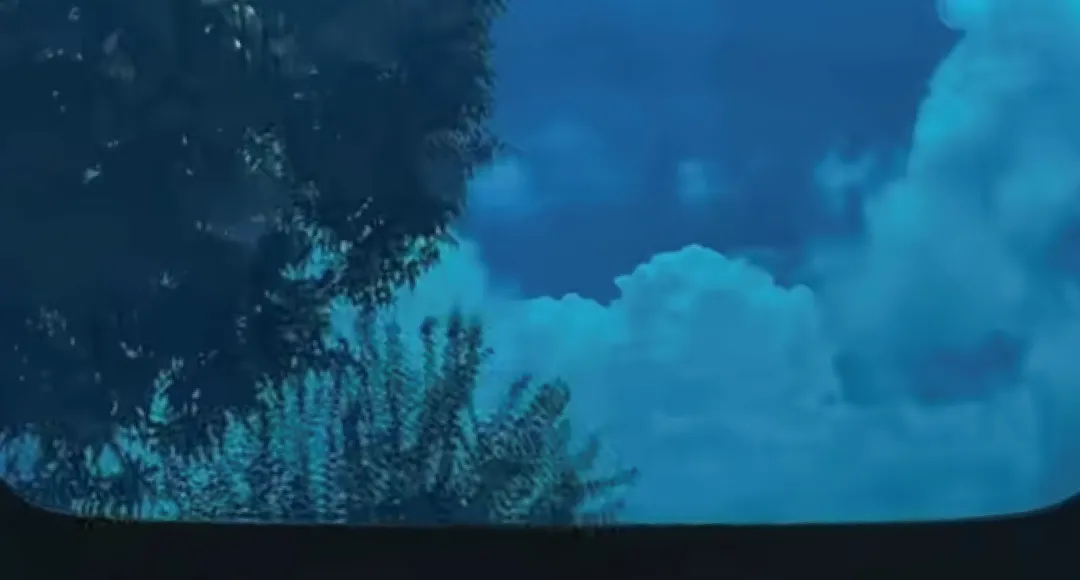
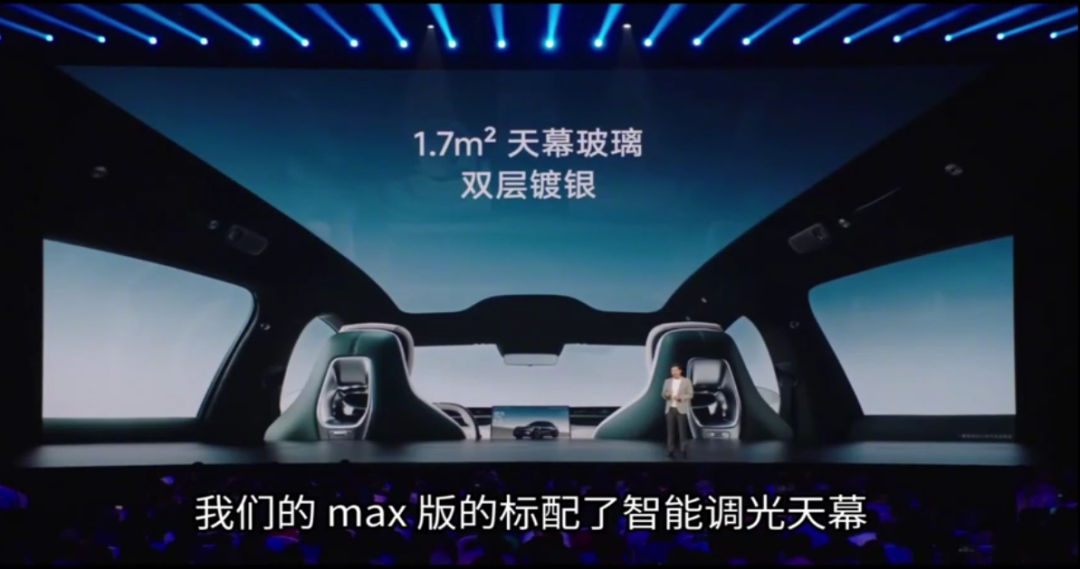
Given the limitations of the above options, is there a solution that allows Tesla’s large panoramic glass roof to achieve superior shading performance, crystal-clear visibility, stronger heat and UV resistance, and faster switching?
Yes, there is.
4. King-Level Player: Astrace Smart-Control Dimming Film
The Astrace Smart-Control Dimming Film, jointly developed by Shanghai Astrace and an international team of senior PhDs, uses microcrystal molecular precision control to achieve intelligent light adjustment. With industry-leading millisecond response speed and ultra-low haze, it switches smoothly between transparent and privacy states while integrating multiple functions such as insulation, UV protection, and explosion resistance — comprehensively enhancing the panoramic roof experience.
Currently, Astrace offers three product solutions:
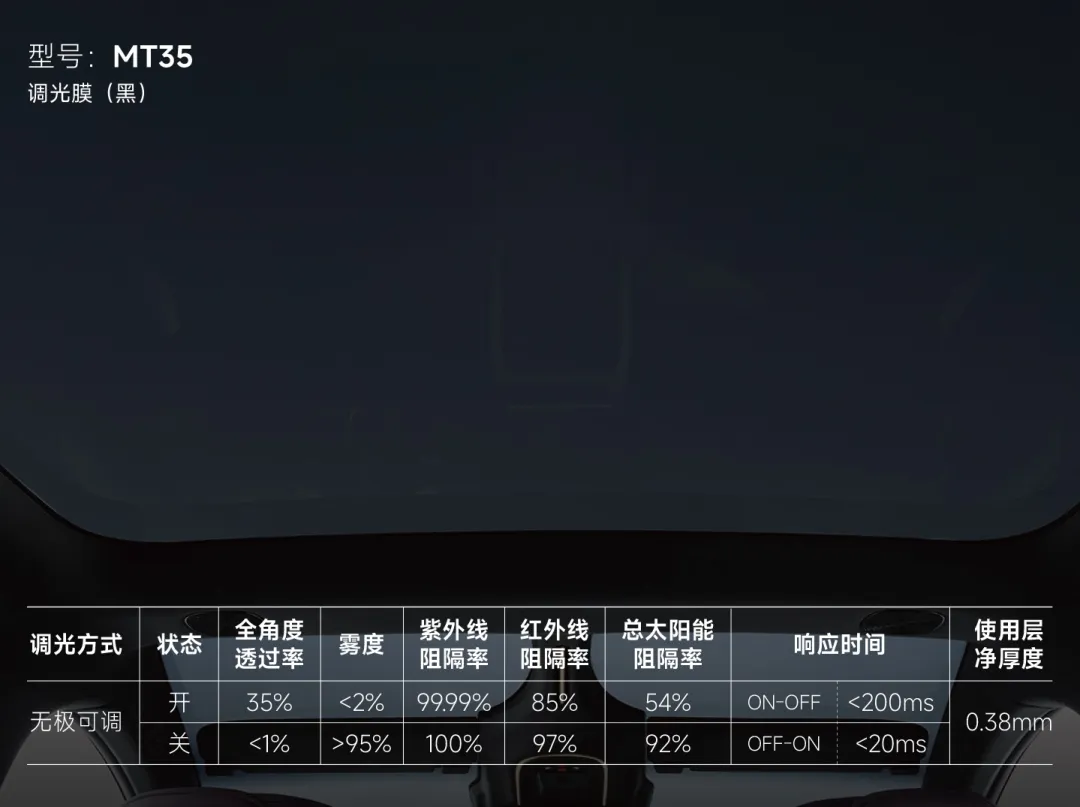
- 3MDT Black Smart-Control Dimming Film (Exclusive Development):
Switching time <0.02s, haze <2%, with clear visibility. In the off state, it blocks up to 92% of total solar energy; even when on, it maintains 54%, significantly reducing interior temperatures.
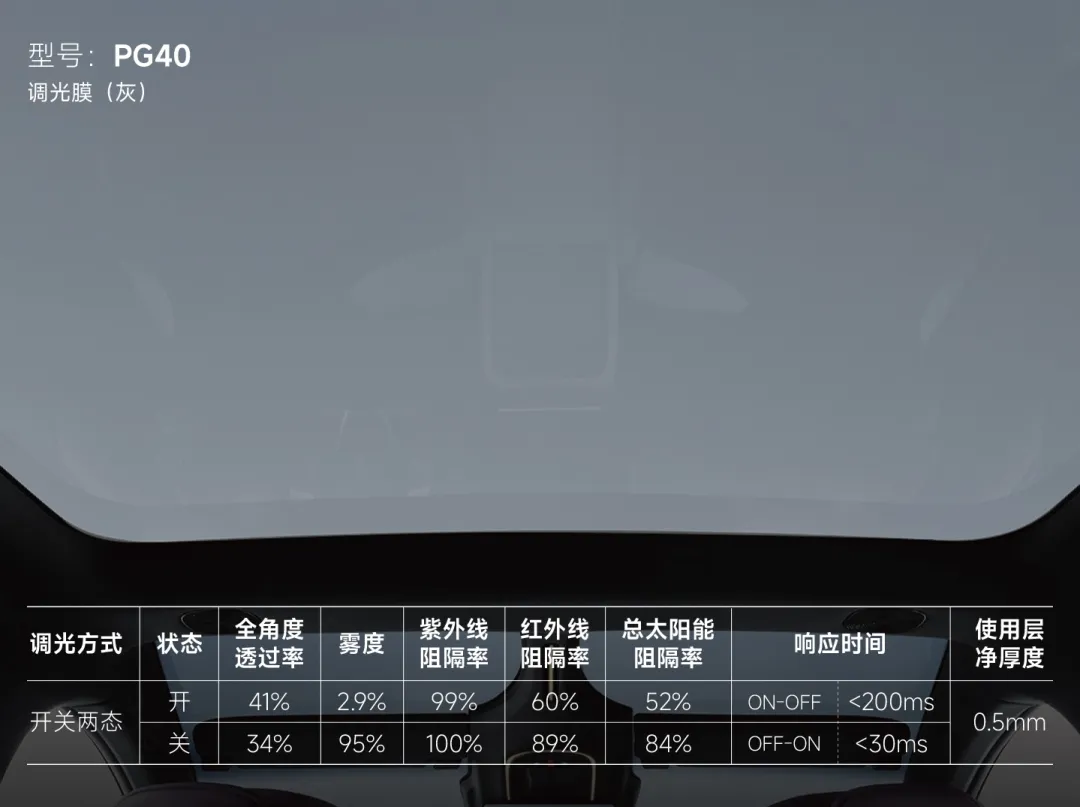
- PDLC Gray Dimming Film (Upgraded Version):
Compared with traditional PDLC technology, it features faster response, lower haze, and improved heat insulation and UV protection.
- PDLC White Dimming Film (Upgraded Version):
Soft light transmission creates a bright and comfortable space, with upgraded insulation and UV protection for a pleasant driving experience.
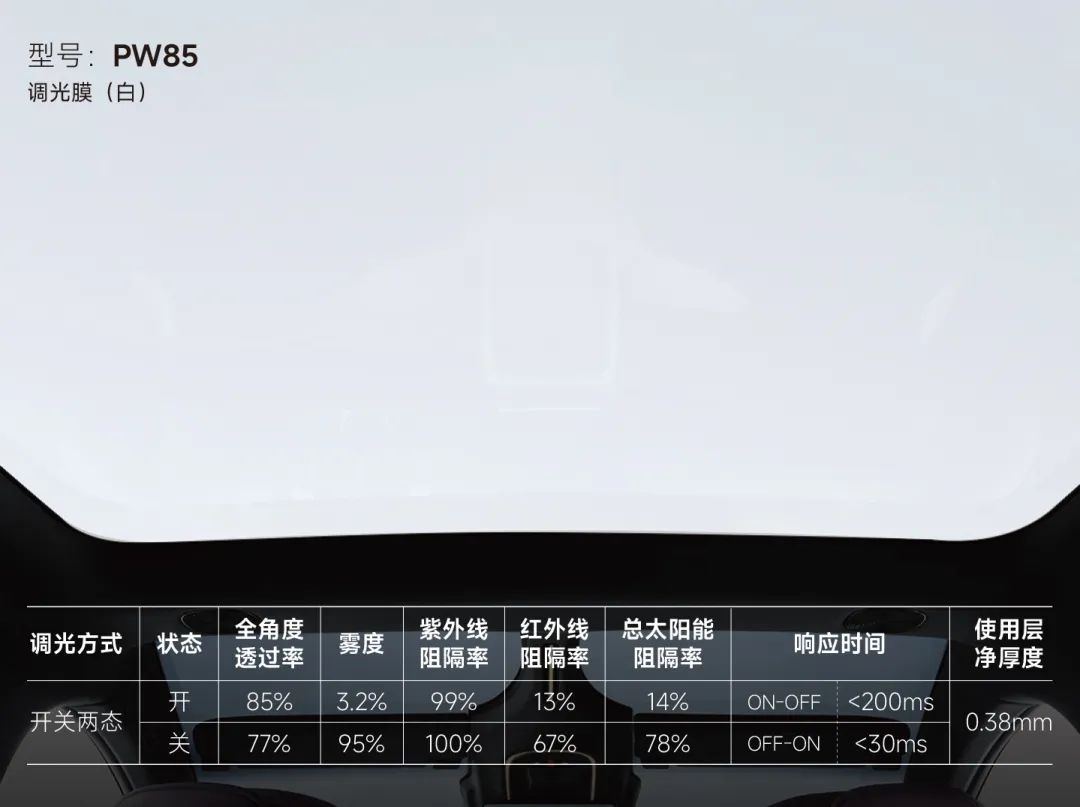
Compared with common EC (Electrochromic) or PDLC (Polymer Dispersed Liquid Crystal) dimming technologies on the market, Astrace’s Smart-Control Dimming Film outperforms in all key metrics — response speed, insulation, UV protection, and privacy.
1. Faster Switching: Less than 20 milliseconds for full transition — instantaneous switching, compared with EC’s 60,000 milliseconds and PDLC’s 100–500 milliseconds.
2. Clearer View: Haze under 2% when transparent, providing a crisp, unobstructed view, unlike EC or PDLC, which tend to appear cloudy.
3. Stronger Heat Insulation: Blocks up to 92% of total solar energy when off, 54% when on, effectively lowering cabin temperature.
4. Ultimate UV Protection: Blocks 100% of ultraviolet radiation, protecting passengers and interiors around the clock.
5. Enhanced Privacy: Less than 1% transmittance from any angle when off, ensuring superior privacy.
6. More Color Options: Available in black, gray, and white to match different interior designs, while traditional EC is limited to blue and PDLC to white.
Tesla Model Y in gray - on display ↓
This is the ultimate solution for Tesla panoramic roofs — the Astrace Smart-Control Dimming Film, helping drivers completely eliminate the “mobile sauna” experience and enjoy a cool, comfortable, and private ride. The Astrace Smart-Control Dimming Film has already been launched under its sub-brands Master Film, Tianmu, and Opass.
When the panoramic roof evolves from a “design trap” to a “cool companion,” summer finally returns to what it should be — not a struggle with sunhats and umbrellas, but effortless comfort and freedom at the touch of a finger.

-

Building 1, Building 3, No.68 Kangyuan Road, Qingpu District, Shanghai, China
-

-
-

+86-17621250420
Copyright © Shanghai Astrace New Material Technology Co., Ltd. All Rights Reserved. Car Modification Smart Glass Film Supplier
